America's #1 home security resource 100% free advice
Have your interconnected alarms installed or inspected by a pro in AZ, or choose the best smart model to install yourself.
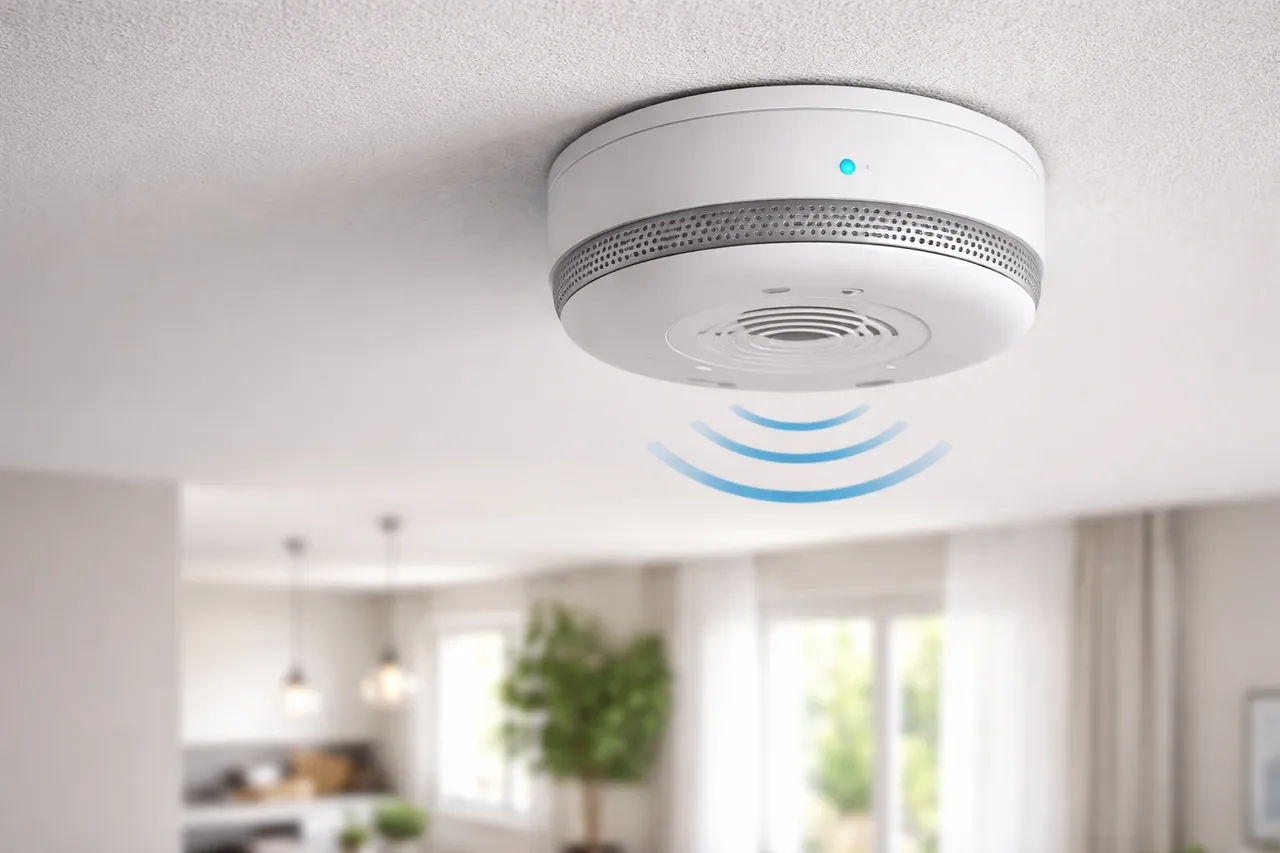
The right smart smoke detector in Phoenix should be UL 217 listed, easy to test and able to alert you even when you're away. In multi-story homes, interconnection between detectors is the single most important feature.
Under NFPA 72 and state and local codes, working UL 217 listed smoke alarms are required in every bedroom, outside each sleeping area, and on every level of every home in Phoenix. Many states require 10-year sealed-battery alarms. After a fire without compliant alarms, your insurance claim can be jeopardized. In a rental, the landlord must provide and install the alarms.
Phoenix is a low-density, single-family metro of subdivisions, gated communities and desert-edge neighborhoods. The defining factor is its large share of seasonal and snowbird homes that sit empty for months — burglars easily spot drawn blinds and untended yards. Block walls, side gates and rear sliders are common entry points, so perimeter cameras and cellular-backed alarms (no always-on home Wi-Fi required) suit the local pattern well.
Housing type: Suburban / single-family
Main residential neighborhoods: Arcadia · Ahwatukee · Desert Ridge · Moon Valley · Encanto · Biltmore
For a multi-story home, a hardwired install or interconnected alarms (all alarms sound at once), having a professional in Phoenix handle it guarantees correct placement, a code-compliant installation and a check of your electrical wiring. It's also the simplest way to bring a rental portfolio up to code or equip the home of someone with reduced mobility.
Your contact details will only be shared with ONE vetted local pro near Phoenix. Zero spam guaranteed.
Get a free quoteFree · No obligation · Only one installer contacted
A smart smoke alarm installs itself in a few minutes. Here are the 5 models we recommend, from the most complete to the budget option, all UL 217 listed.
| Alarm | Rating | Best for | Action |
|---|---|---|---|
| Nest Protect Smoke + CO · ≈ $129 | The gold standard, voice alerts | Amazon≈ $129 | |
| Kidde Firex 10-year battery | Equip the whole house affordably | Amazon≈ $49 | |
| First Alert Onelink Apple HomeKit | Apple ecosystem, Siri & Home app | Amazon≈ $149 | |
| X-Sense SC07-WX Interconnected | Larger homes, strict compliance | Amazon≈ $59 | |
| X-Sense Smart Smoke No subscription | Wi-Fi alerts, no hub required | Amazon≈ $69 |
To compare each model in detail (smoke + CO, interconnection, battery life), check our full national comparison before buying.
Smoke is the main danger in a fire. Carbon monoxide (CO) is an invisible, odorless gas produced by gas heaters, furnaces, fireplaces and generators — deadly in high concentrations. If you have a fuel-burning heating system in Phoenix, install a combination smoke + CO alarm (like the Nest Protect or a UL 2034 listed CO alarm). In the kitchen, opt for a heat alarm that won't trigger on cooking smoke.
Only the First Alert Onelink is natively HomeKit-compatible. For Siri automations and the Home app, it's the one to get. Our pick: First Alert Onelink.
For maximum protection with voice alerts, automatic interconnection and sensor self-testing. Our pick: Google Nest Protect.
To cover multiple rooms affordably with wireless interconnection and a 10-year battery. Our pick: Kidde Firex (2- or 3-pack).
For smartphone alerts with no monthly fee and no separate hub — a great fit for homes in Arizona. Our pick: X-Sense Smart Smoke Alarm.
Test your alarms once a month and replace each unit after 10 years at most.
It's not required: a standalone alarm installs itself in 5 minutes. That said, bringing in a professional in Phoenix is genuinely worthwhile for a multi-story home (interconnected alarms), a hardwired install, a rental portfolio that needs to meet code, or an occupant with reduced mobility. The pro also confirms correct placement (bedroom hallways, away from the kitchen) and the condition of the electrical wiring.
Code requires alarms in every bedroom, outside each sleeping area, and on every level per NFPA 72. In practice, install one in each main room (living room, bedrooms). For a multi-story house in Phoenix, plan on at least one per level, preferably interconnected.
Yes. You should choose alarms that are UL 217 listed, in Phoenix as everywhere in the US. This listing guarantees detection reliability and alarm loudness (≥ 85 dB). Every model in our comparison is UL 217 listed.
A smoke alarm has a maximum lifespan of 10 years, after which the sensors age. The expiration date is printed on the back of the unit. Models with a 10-year sealed battery (Kidde, X-Sense) are replaced whole at end of life; for a removable battery, change it every year.
NFPA guidance calls for a detector inside every bedroom, outside each sleeping area, and on every level of the home — including the basement.
They detect different dangers. Smoke alarms are essential everywhere; a carbon monoxide detector is required wherever there's a furnace, fireplace or any fuel-burning appliance. Combination units cover both.
Yes — choose a detector that is UL 217 listed. Connectivity never replaces certified fire detection.
Smoke detectors should be replaced every 10 years. The battery may be replaceable or sealed depending on the model.
To go further on securing your home in Phoenix, these guides complement this smoke alarms page.