America's #1 home security resource 100% free advice
Get a price estimate for an alarm installed by a licensed, UL-certified pro across TX, or discover the best kits you can set up yourself.
In Houston, the best choice is usually a wireless alarm with mobile alerts and battery backup, sized to your type of home. For areas like The Heights and Memorial, focus on protecting easy entry points and add a cellular (LTE) backup if the home sits empty for several days at a time.
Before choosing between having your alarm installed or doing it yourself, here's what you need to know about the real risk in Houston and across TX.
Houston, the fourth-largest US city with roughly 2.3 million residents, sprawls across master-planned suburbs and established single-family neighborhoods. With wide lots, detached garages and long driveways, perimeter protection matters as much as the front door — and many Houston homes layer cameras with a monitored alarm.
In short: The Houston Police Department logs tens of thousands of burglaries and thefts a year, with garages, back doors and unsecured windows among the most common entry points.
Source: FBI Crime Data Explorer (UCR) & Bureau of Justice Statistics — 2023 data.
| Category | TX rate | US avg. | Diff. |
|---|---|---|---|
| Burglaries | 3.00 | 3.00 | ≈ average |
| Aggravated assaults | 2.90 | 2.70 | +7% |
| Home invasions | 1.20 | 1.00 | +20% |
| Vehicle thefts | 3.30 | 3.00 | +10% |
| Larceny / theft | 14.40 | 13.00 | +11% |
Compare Houston with another state using our interactive tool
Houston is a sprawling, car-dependent metro where single-family homes dominate, often on wide lots with detached garages, side gates and long driveways. Perimeter entry points — back doors, patio sliders, fence gates and garages — account for most break-ins, so exterior cameras and a visible yard sign carry real deterrent weight. Hurricane-season power loss makes battery and cellular backup especially valuable here.
Housing type: Suburban / single-family
Main residential neighborhoods: The Heights · Memorial · Bellaire · Katy · Sugar Land · Clear Lake
In the more spread-out parts of Houston, for example around The Heights and Memorial, think about the perimeter before the interior: gates, garage, patio sliders and yard access. A visible outdoor camera or floodlight cam plus a few perimeter sensors sharply increase deterrence before anyone reaches the door.
Going with a licensed, UL-certified installer isn't a luxury: the install is clean and discreet (sensors well placed, siren out of reach), the equipment is sized for your home, and above all a code-compliant installation is recognized by insurers — something that can make a difference both on a claim and on your premium.
UL-listed monitoring, ESA membership and proper state licensing are the credentials insurers recognize for an alarm system. Here are providers serving Houston and the state of TX who carry them.
One licensed pro gets back to you within 24 hours. No spam, no obligation.
If you're even a little handy, a modern wireless alarm installs in 2 to 3 hours, no construction. Here are the 3 most popular wireless kits, ideal for tight budgets or renters across TX.
| Alarm | Rating | Best for | Action |
|---|---|---|---|
| SimpliSafe $250–$400 | Houses and large apartments | Amazon | |
| Ring Alarm Pro $200–$300 | Apartments, tight budgets, renters | Amazon | |
| Abode Smart Security Kit ~$280 | Houses, smart-home ecosystem | Amazon |
In Houston, the large share of single-family homes often pushes the budget toward $600 to $1,500, since you have more to cover: front door, garage, patio sliders, outbuildings and the yard. Residential areas like The Heights and Memorial often justify an outdoor camera and a cellular backup module.
Here are two representative profiles our team sees in Houston, illustrating the common trade-offs by neighborhood, home type and lifestyle. (Illustrative examples.)
Profile:Homeowner, single-family with a detached garage
Setup:Alarm + outdoor cameras
“Our long driveway and side gate were easy to slip past at night. We put cameras on the driveway and back gate plus door sensors throughout. Between the floodlight cam and the yard sign, the foot traffic stopped fast.”
Profile:Homeowner, two-story with patio sliders
Setup:Monitored alarm with cellular backup
“During hurricane season we lose power, so I insisted on battery and cellular backup. The patio sliders got glass-break sensors and the system kept reporting through an outage last summer. Worth every dollar for the peace of mind.”
Any alarm triggered by a break-in or attempted break-in should be reported to police as soon as possible — a police report number is almost always required for your homeowners or renters insurance theft claim.
HPD — patrol division storefronts across the city (houstontx.gov/police)
713-884-3131 (non-emergency) or 911 (emergency)
Jurisdiction: Houston Police Department (HPD)
Many departments offer a free vacation house check program: register an extended absence in Houston and patrol officers will keep an eye on your home while you're away. Contact your local precinct to enroll.
Possibly. Installing an alarm in your own home is free to do, but many US cities — including Houston — require you to register your alarm system with the police department and may charge a small annual fee. The bigger thing to watch is false-alarm fines: after a few false dispatches, Houston can bill you per incident. Check your city's alarm-permit rules before you turn the system on.
Often, yes. Many insurers offer a 5 to 20% discount on your homeowners or renters premium for a monitored alarm system, with a larger discount when it's a UL-listed system connected to professional monitoring. Ask your insurer which equipment qualifies before you buy or install, and keep the receipt.
For a professional install, expect roughly $600 to $2,500 depending on the size of your home and the tier (equipment + installation), plus an optional professional monitoring plan ($20 to $60/month). Comparing a few free quotes is still the best way to get a fair price in Houston and across TX.
Yes — modern wireless alarms are reliable for most homes in Houston. They avoid running cable and mainly require good sensor placement and periodic battery changes.
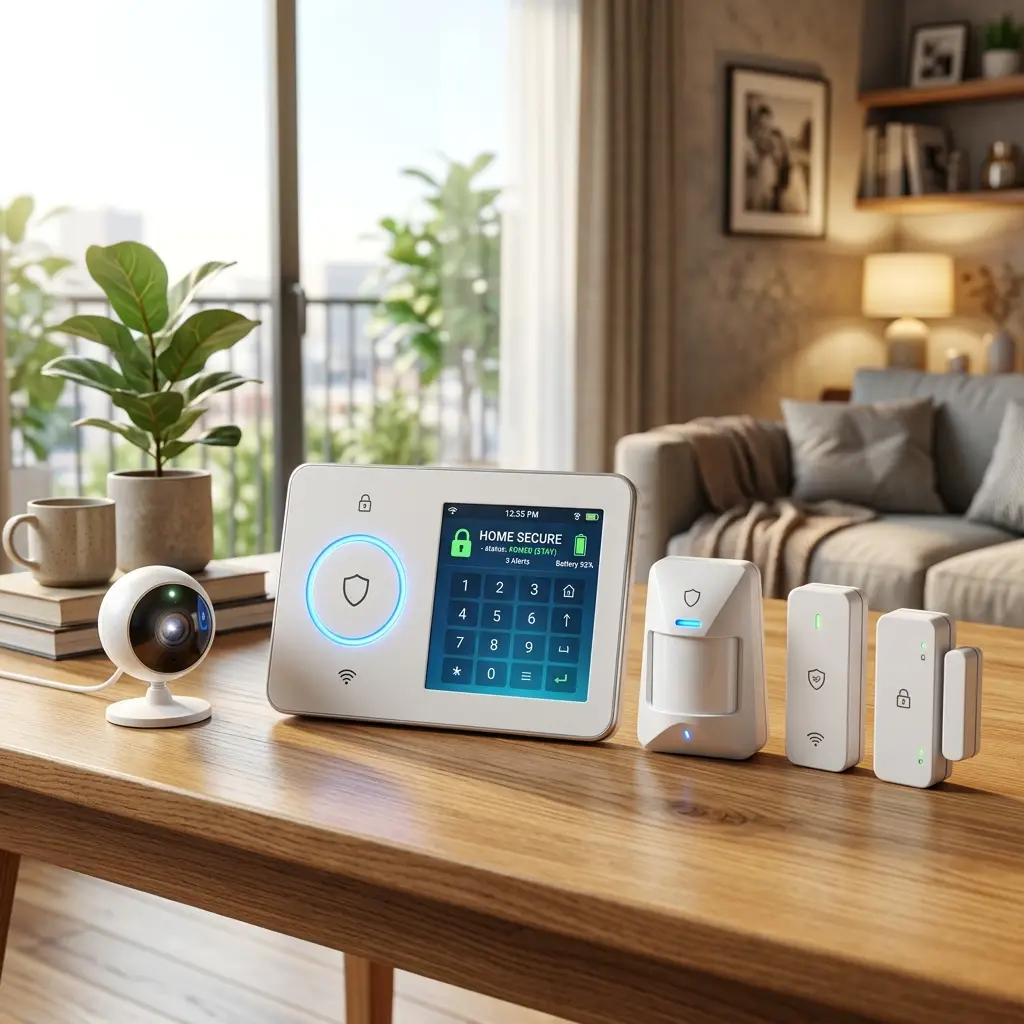
For about 1,000 sq ft, plan on roughly 4 to 6 entry (door/window) sensors, 2 to 3 motion detectors, a base station, a siren and a keypad or key fobs.
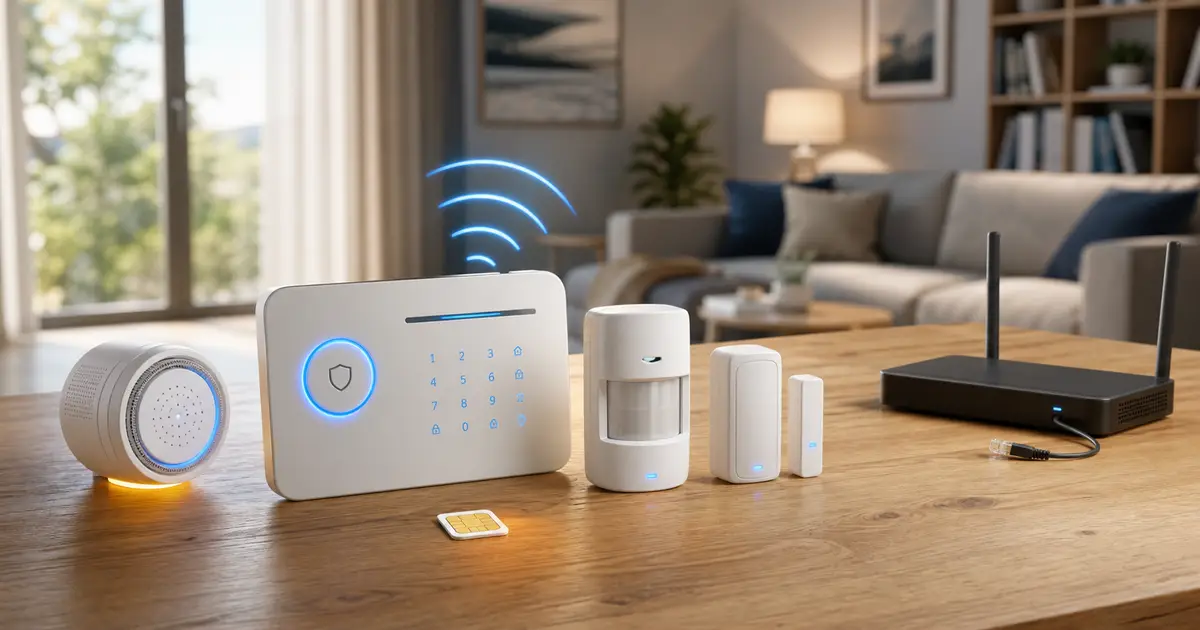
A quality alarm keeps running on battery backup. To keep receiving alerts during an internet outage, choose a system with a cellular (LTE) backup module.
Wireless alarms are designed for DIY installation. A professional is still worth it for a large home, professional monitoring or a fully integrated, certified setup.
To dig deeper based on your situation, these guides complement this home alarm page for Houston.