

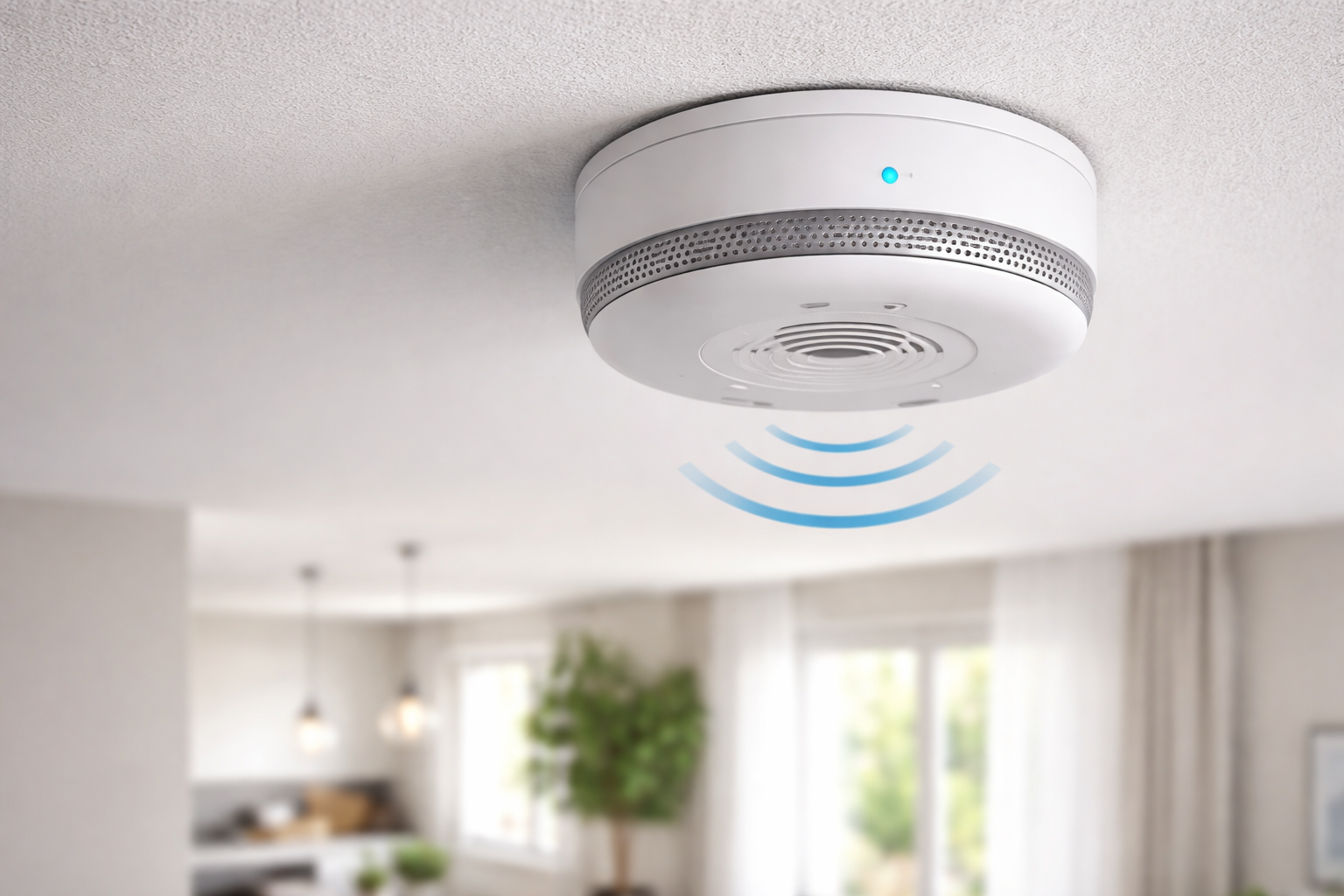
How many smoke detectors you need and exactly where to put them — by level, bedroom, and ceiling placement — plus where NOT to install them. This guide sums up the criteria that matter, the mistakes to avoid and the concrete choices that help you decide faster.
A smoke alarm only saves lives if it’s in the right place — and on too many of the homes I’ve walked through, it isn’t. One alarm by the front door, none in the bedrooms, and the family sleeping behind closed doors that a single hallway unit will never wake them through in time. Working smoke alarms cut the risk of dying in a home fire roughly in half, but only when there are enough of them, in the right rooms.
In fifteen years assessing homes, the placement mistakes are almost always the same: too few alarms, the wrong rooms, or a unit stuck right next to the kitchen where it gets silenced after one too many false alarms from cooking. This guide gives you the simple rules — how many you need, exactly where they go, and where they must never go — so your home is covered the way it should be.
The quick answer (NFPA rule of thumb)
The widely used U.S. guidance (NFPA 72) is simple to remember. Install a smoke alarm:
- On every level of the home, including the basement.
- Inside every bedroom.
- Outside each sleeping area (e.g., in the hallway serving the bedrooms).
A small one-bedroom apartment might need 3 alarms; a two-story house with three bedrooms can easily need 6–8. When in doubt, more coverage beats less — and interconnected alarms beat standalone ones.
How many smoke detectors do you need?
Count it room by room:
- 1 per level (basement, main floor, each upper floor) — placed in or near the hallway/landing.
- +1 inside each bedroom.
- +1 outside each sleeping area if the bedrooms aren’t already covered by a nearby hallway unit.
A quick example for a typical 2-story, 3-bedroom house: 3 bedrooms (3) + upstairs hallway (1) + main floor (1) + basement (1) = 6 alarms, interconnected.
Where to place each alarm in the room
Smoke rises, so placement is about height and clearance:
- On the ceiling, ideally — at least 4 inches (10 cm) away from any wall.
- If wall-mounted, place the top of the alarm 4–12 inches (10–30 cm) below the ceiling.
- Keep alarms at least 3 feet (1 m) from HVAC vents, ceiling fans, and supply registers — moving air pushes smoke away from the sensor.
- On a vaulted or peaked ceiling, mount within 3 feet of the highest point (but not in the very apex, where a dead-air pocket can form).
Score your home’s fire coverage
Before you fix anything, see where you stand. Award yourself the points, then total them.
🚨 How well-covered is your home?
4 quick questions. An honest score beats a false sense of safety.
1. Is there a working smoke alarm on every level (including the basement)?
2. Is there an alarm INSIDE every bedroom?
3. Are your alarms interconnected (one sounds → all sound)?
4. How old are your alarms?
Where NOT to put a smoke detector
Bad placement causes nuisance alarms — and a nuisance alarm gets disabled, which is how people end up unprotected:
- Too close to the kitchen — keep smoke alarms at least 10 feet (3 m) from cooking appliances, or use a photoelectric type that tolerates cooking better. For the kitchen itself, use a heat alarm, not a smoke alarm.
- In or right outside bathrooms — steam triggers false alarms.
- In the garage — vehicle exhaust and temperature swings cause problems; use a heat alarm there.
- Directly in front of vents, fans, or windows — airflow pushes smoke away from the sensor.
- In a ceiling’s dead-air apex or tucked into a corner.
Smoke vs. heat vs. CO: which goes where
| Type | Detects | Best location |
|---|---|---|
| Smoke (photoelectric) | Smoldering fires, smoke | Every level, bedrooms, hallways |
| Heat alarm | Rapid temperature rise | Kitchen, garage, attic, furnace room |
| Carbon monoxide (CO) | Carbon monoxide gas | Near sleeping areas & fuel-burning appliances |
| Combo smoke + CO | Both smoke and CO | Bedrooms & hallways (one unit, less clutter) |
Interconnected and smart alarms
If you only change one thing, make your alarms interconnected — when one detects smoke, they all sound. Hardwired homes often already support it; for everything else, wireless interconnected alarms link over radio with no new wiring. Smart models add phone alerts when you’re away, which matters for a fire that starts in an empty house.
For the smart route, read our hands-on Google Nest Protect review, or compare the field in our best smoke detectors guide. Smoke and CO alarms also slot neatly into a wider setup — see smart home security automation to tie alerts together.
Get a free assessment within 24 hours from a licensed pro near you — alarms, detectors, entry points. No obligation, zero spam.
Conclusion
Smoke alarm placement isn’t complicated — it’s just often skipped. One on every level, one inside each bedroom, one outside each sleeping area, all interconnected. Keep them off the kitchen and away from vents, use heat alarms where smoke alarms would false-trigger, and replace any unit older than ten years. Spend an afternoon getting this right and you’ve made the highest-value safety improvement your home can have. Then test them — once a month, every month.
Frequently Asked Questions
How many smoke detectors do I actually need?
At minimum: one on every level of the home (including the basement), one inside each bedroom, and one outside each sleeping area. A typical two-story, three-bedroom house usually needs about 6–8, interconnected. A small apartment may need 3.
Should a smoke detector go on the ceiling or the wall?
The ceiling is best, because smoke rises — keep it at least 4 inches (10 cm) from any wall. If you must wall-mount, place the top of the alarm 4–12 inches (10–30 cm) below the ceiling. Keep it 3 feet (1 m) clear of vents and fans either way.
Can I put a smoke detector in the kitchen?
Not a smoke alarm right next to the stove — cooking will set it off and people disable it. Keep smoke alarms at least 10 feet (3 m) from cooking appliances, and use a heat alarm for the kitchen itself.
How often should I replace smoke detectors?
Replace the whole unit every 10 years (the sensor degrades), test it monthly, and replace removable batteries yearly. Sealed 10-year alarms remove the yearly battery chore — you just replace the unit at the end of its life.
Do my smoke alarms need to be interconnected?
It’s strongly recommended. Interconnected alarms all sound when any one detects smoke, so a basement fire wakes the people sleeping upstairs. If you can’t run wires, wireless interconnected alarms link over radio with no new wiring.
Where do carbon monoxide detectors go?
Near sleeping areas and close to fuel-burning appliances (furnace, water heater, gas stove). A combination smoke + CO alarm in bedrooms and hallways is a tidy way to cover both. CO is invisible and odorless, so detection is the only warning you get.
Sources
- NFPA — Smoke alarm placement & safety — National Fire Protection Association guidance (NFPA 72).
- U.S. Fire Administration — official home fire safety data and recommendations.
- Ready.gov — Home fires — federal preparedness guidance.
- Manufacturer specifications (First Alert, Kidde, Google Nest, X-Sense) for sensor type, sealed-battery life, and interconnection.
